


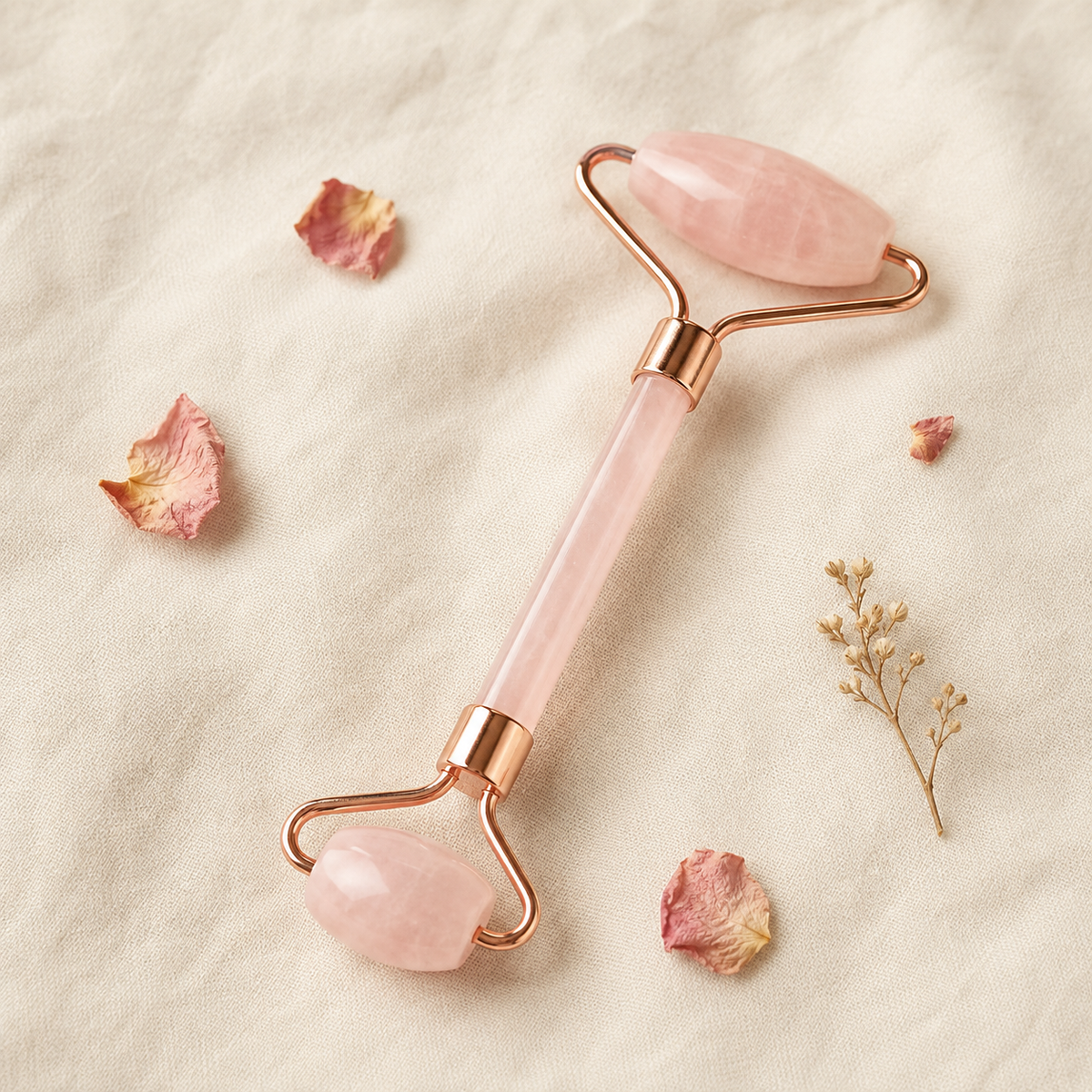
Natural Rose Quartz Eye Massage Jade Roller Dongling
Natural Rose Quartz Eye Massage Jade Roller Dongling
A science-backed serum that uses EGF and NAD+ to visibly firm skin, reduce fine lines, and restore a youthful glow — fast.
🤎 Skin that looks noticeably younger
🔬 Clinically proven EGF + NAD+
🪷 Fine lines fade, firmness comes back
Couldn't load pickup availability
How It Works
How It Works
Apply 3–4 drops of the Elarix EGF NAD+ Firming Serum to cleansed skin every morning and evening, gently pressing it into the face, neck, and décolletage.
EGF (Epidermal Growth Factor) signals your skin cells to renew themselves, while NAD+ fuels the cellular energy needed for that repair to actually happen.
Use consistently for 4–8 weeks for best visible results — most customers notice a difference within the first two weeks.
Our Guarantee
Our Guarantee
We stand behind every product of ELARIX 100%. If you're not completely satisfied with your results within 30 days — for any reason — we'll refund you in full, no questions asked. You take zero risk. We take all of it.
Shipping & Delivery
Shipping & Delivery
We process orders within 24 hours and deliver them within 6-12 days depending on your location, with tracked shipment included for your convenience.

"I've tried serums at twice the price that did half as much. My skin feels genuinely firmer and the lines around my mouth are noticeably softer after just three weeks."

"My dermatologist actually asked what I'd been doing differently. I told her about this serum and she wasn't surprised — EGF is no joke."

"I'm 54 and my skin hasn't looked this good since my 30s. It absorbs beautifully and doesn't leave any greasy feeling — just results."


EGF signals your skin to regenerate
Epidermal Growth Factor is a protein your skin naturally produces — but production slows dramatically with age.
Replenishing it sends a direct signal to skin cells to repair, renew, and rebuild collagen, visibly reversing the loss of firmness and density that defines aging skin.

NAD+ reignites your skin's cellular energy
Without energy, even the best ingredients can't do their job. NAD+ is the coenzyme that powers cellular repair — and it depletes with age just like collagen does.
By restoring NAD+ levels in the skin, this serum ensures the renewal process actually has the fuel it needs to go the distance.

Firmer texture and fewer fine lines, visibly
Users report visibly plumper, smoother skin within 2–4 weeks of consistent use.
Fine lines around the eyes, mouth, and forehead soften as collagen synthesis ramps back up — not because anything is being filled in, but because your skin is doing what it was always designed to do

Add It to Your Routine in 30 Seconds
The Elarix EGF NAD+ Firming Serum fits into any skincare routine with zero friction.
After cleansing (and toning, if you use one), dispense 3–4 drops into your palm, warm slightly between fingertips, and press gently into skin — no rubbing required.
Try it for 30 days — completely risk-free
If you don't love your results, we'll refund you. No questions asked.
Frequently Asked Questions
Questions? We've Got Answers
How are EGF and NAD+ different from retinol or vitamin C?
Retinol and vitamin C are powerful, but they work largely by accelerating surface cell turnover or neutralizing oxidative damage.
EGF and NAD+ work at a deeper level — triggering the biological signals that control cellular renewal and fueling the energy your cells need to actually carry out that repair.
Think of it as addressing the cause rather than the symptom. Many customers use the Elarix serum alongside vitamin C in the morning or retinol at night without any issue.
How soon will I see results?
Many customers notice improved hydration and a subtle glow within the first 1–2 weeks.
More significant changes — firmer skin texture, reduced fine lines, improved elasticity — typically become visible between weeks 3 and 6 with consistent use.
Like all skin renewal ingredients, EGF and NAD+ work in alignment with your skin's natural regeneration cycle, which runs on roughly a 28-day clock. Patience pays off considerably here.
Is this serum safe for sensitive skin?
Yes. The Elarix EGF NAD+ Firming Serum is formulated without parabens, artificial fragrances, sulfates, or harsh alcohols.
EGF is a naturally occurring protein your skin already produces, making it exceptionally well-tolerated even by reactive or sensitive skin types.
As with any new active ingredient, we recommend a patch test on the inner forearm before full-face use if you have a history of sensitivity.
Can I use this serum with retinol or AHAs?
Absolutely. EGF and NAD+ play nicely with most other actives. A common approach is to use the Elarix serum in the morning (under SPF) and reserve retinol or exfoliating acids for your evening routine.
If you're using a prescription-strength retinoid, we recommend spacing application and checking with your dermatologist, as with any new product.
Why is EGF considered so effective for anti-aging?
EGF was first studied in the context of wound healing — researchers noticed it dramatically accelerated skin cell regeneration.
That same mechanism is what makes it so compelling in anti-aging skincare: it signals keratinocytes and fibroblasts (the cells responsible for collagen and elastin production) to become more active.
Numerous clinical studies have demonstrated that topical EGF application can meaningfully improve skin firmness, elasticity, and fine line depth over 4–8 weeks of use.